
S3 SURFACES · SUSTAINABILITY
Material responsibility.
Built into the surface.
Sustainability at S3 is considered across the material, manufacturing route, service life, packaging and documentation — not added as a marketing layer after the product is designed.
THE MATERIAL CASE
A longer-life surface starts with the material itself.
S3 Bonded Surfaces are engineered for long life and lower environmental impact — using 36–51% recycled content in defined Metallic Bonded configurations and non-toxic materials, while delivering strong resistance to water, termites, borers, abrasion, wear and scratching. Their long service life helps minimise replacement, material waste and associated carbon impact.
S3 SURFACES INDIA’S SUSTAINABILITY OBJECTIVE“To ensure that S3 Surfaces’ commitment to sustainability extends beyond the product itself to its packaging, minimising environmental impact and aligning with global green standards.”
SUSTAINABLE SURFACES FOR THE BUILT ENVIRONMENT
Designed for demanding spaces.
Built around sustainability.
S3 Surfaces India manufactures architectural, sustainable and decorative 3D Bonded Surfaces designed for demanding interior environments. Our sustainability approach addresses environmental impact across the product life — from material selection and manufacturing to packaging, installation, maintenance and long-term service.
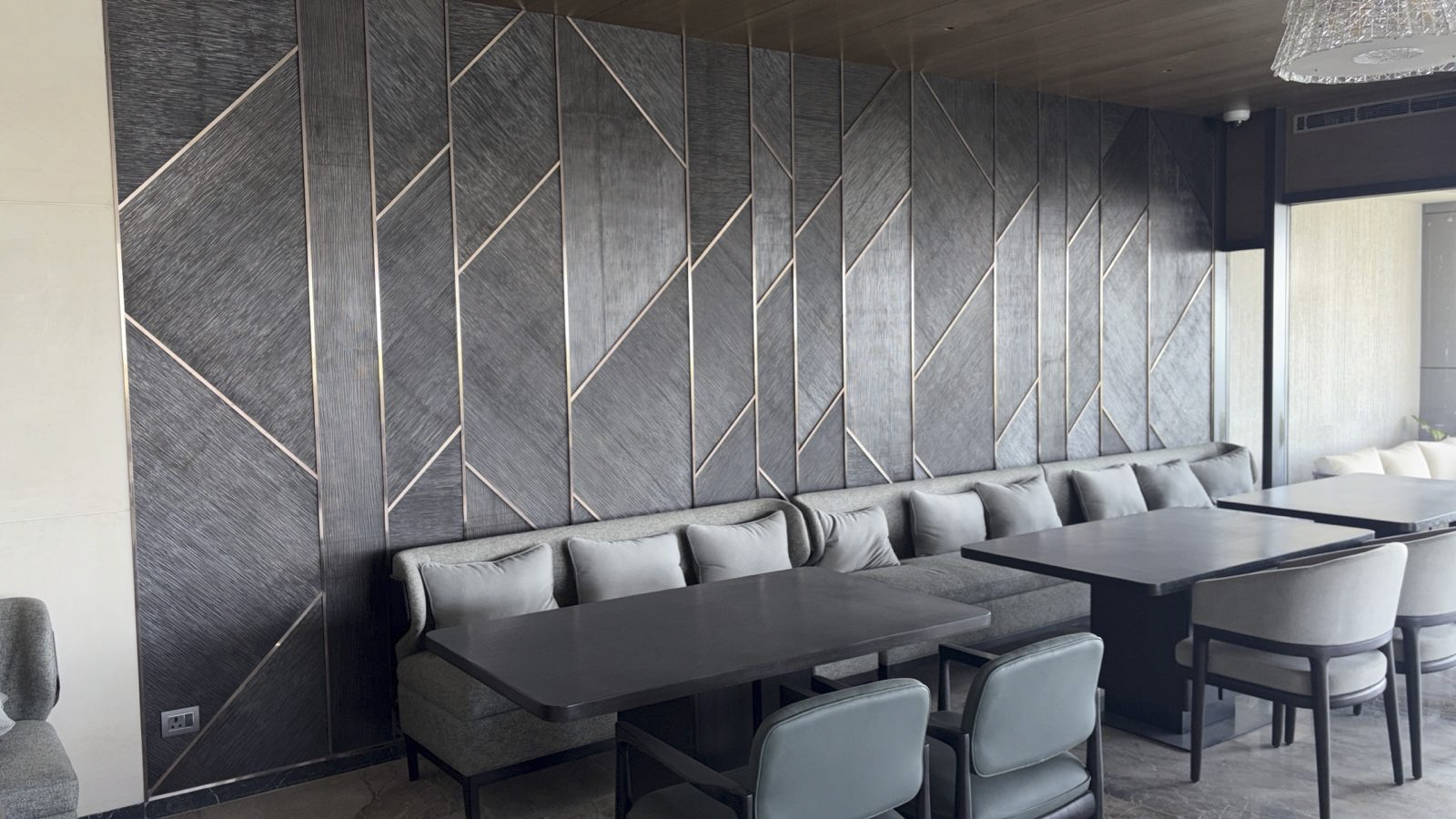
For hospitality and other high-use public spaces such as hotels, resorts, elevators, feature walls and claddings, S3 provides durable architectural materials designed to support projects pursuing Green Building Standards and project-specific environmental objectives.
Resource & Waste Reduction
S3 Bonded Surfaces use 36–51% recycled content in defined Metallic Bonded material configurations, together with non-toxic materials and an exceptionally low manufacturing-waste approach. Long service life helps reduce replacement frequency and associated material consumption.
Circular Packaging
S3's packaging approach prioritises reusable and recycled packaging components, including wooden planks, plywood, corrugated/cardboard materials and recycled polymer-based protective foam. The objective is to minimise virgin material use, reduce packaging waste and extend the useful life of packaging materials.
Low-Maintenance Longevity
S3 Bonded Surfaces are engineered for long-term performance, with strong resistance to water, termites, borers, abrasion, wear and scratching. Their durable, low-maintenance character helps reduce the lifetime environmental overhead associated with repeated replacement, refurbishment and intensive maintenance of interior surfaces.
WHY THE CONSTRUCTION MATTERS
Compare the material system, not just the appearance.
S3 Metallic BondedReal metal granules cast into a fibre-reinforced polymer composite, creating a lightweight architectural surfacing system with controlled texture, colour and patina.
Traditional solid metalAchieves authentic metal character, but uses the mass of a solid-metal construction throughout the component.
Traditional stone / solid mineral surfaceProvides mineral character, but carries the material mass and fabrication model associated with a solid material.
FOUR AREAS OF ACTION
From material selection to the finished project.
Material efficiency
Metallic Bonded systems use recycled metal content in defined configurations and a bonded cast-composite construction rather than a solid metal sheet.
Durability & longevity
A 15-year warranty for covered interior applications supports a longer-life specification approach, helping reduce the frequency of replacement and repeated fit-outs.
Manufacturing & waste
S3 focuses on controlled casting, material utilisation and reduction of manufacturing waste. The sustainability assessment is based on documented product and process information rather than an unqualified energy claim.
Responsible packaging
Current packaging practices include reuse of protective materials and reduced dependence on unnecessary packaging. S3 is also developing further packaging improvements as part of its sustainability roadmap.
PACKAGING & CIRCULARITY
Protect the material.
Reduce the waste.
S3's packaging approach considers what happens before the sheet reaches site. We prioritise reusable and recycled packaging components to reduce environmental impact across the product journey.
- Reuse of wooden planks, plywood and corrugated sheets where practical
- Use of recycled polymer-based protective foam materials
- Development of biodegradable protective-film initiatives
- Supplier expectations for environmentally responsible practices
Packaging components and initiatives are subject to ongoing development; project teams should confirm current packaging arrangements where a formal requirement applies.
FOR SPECIFIERS
Put the sustainability statement next to the evidence.
For architects, designers, consultants and procurement teams, S3 is building a documentation-led pathway for evaluating environmental information alongside product, performance and installation requirements.
GREEN BUILDING STANDARDS
Designed to support evidence-led specification.
S3's sustainability work is intended to support architects, consultants and developers evaluating material choices within Green Building Standards and project-specific environmental requirements.
The correct approach is documentation first: identify the exact surface configuration, use the applicable environmental data, and confirm the current project requirement with the S3 technical team.
Discuss a project requirementLOOKING AHEAD
Progress should be measurable.
2027Target: 100% plastic-free packaging across product lines.
2029Target: customer take-back programme for packaging reuse or recycling.
2030Target: develop compostable packaging solutions.
These are future goals, not current certifications or completed achievements. S3 will update this page as each initiative progresses.
WORK WITH THE DATA
Specify sustainability with material context.
Tell us the project, certification pathway or documentation requirement. We can help identify the relevant product and environmental information.
Request Sustainability Documents